The Golf Cart Rule That Explains How Catawba Springs Actually Works
August 20, 2026
August 20, 2026
Ask around the neighborhood long enough and someone will bring up the golf carts. Not the ones on the course, the ones people wanted to drive to get the mail, or over to a neighbor's driveway for a cookout. The Catawba Springs Property Owners Association had to put it in writing: golf carts are built for the course, they top out around 20 miles an hour, and North Carolina law does not let you take one onto a city street. If you want a low-speed vehicle for the neighborhood roads, it needs to be registered with the state, a different category entirely.
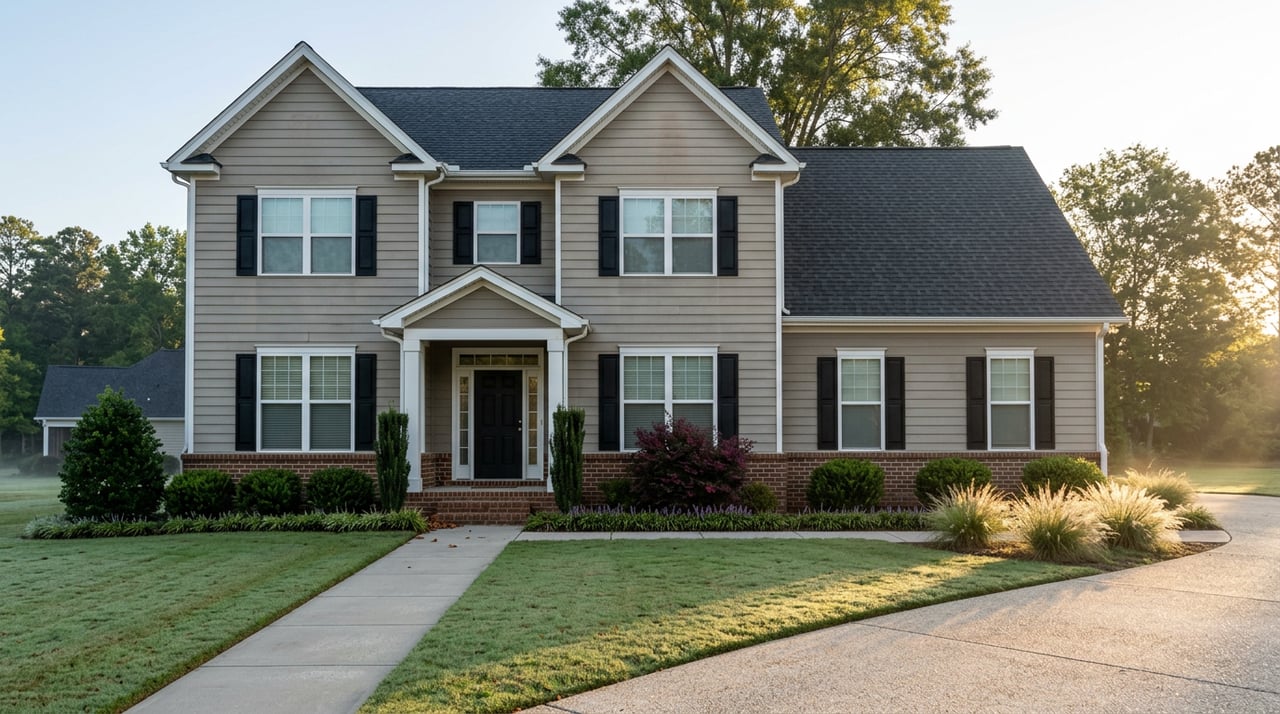
It sounds like a small housekeeping note. It is actually a pretty good window into how this place runs. Catawba Springs looks, from the outside, like a single golf-community package: big lots, mature trees, a course running through the middle of it. Live here for a season and you start to notice it is really two separate operations sitting next to each other. One is a private country club with its own dues, its own dining minimums, and a membership office. The other is a volunteer-run homeowners association that mails an invoice for $100 in January and meets on the first Tuesday of the month. Neither one needs the other to function, and neither one is optional to understand if you actually live here.
The course itself has more history packed into it than the "golf neighborhood" label suggests. It was designed by Willard Byrd and opened in 1968, decades before most of the homes around it existed. What people call one 27-hole layout is technically two nines with their own names, Fox Run and Sulphur Springs, that combine into a par-72, 6,610-yard course. A third nine, Dogwood, rounds out the rotation depending on which combination is playing that day. None of that trivia matters for your morning walk, but it does explain why longtime members talk about the course in terms of which nine they're playing rather than just "the golf course."
The club that operates it, Lake Hickory Country Club, has been around since 1923 and runs on a structure that catches new residents off guard. It operates two clubhouses, the Town Club and the Catawba Springs Clubhouse, and they are not interchangeable. A Catawba Springs membership gets you golf, fitness, and dining at the neighborhood clubhouse. It does not get you into the Town Club's amenities across town. Every membership tier, whatever the level, comes with what the club describes as a modest food and beverage minimum, meaning part of what you're paying for is an expectation that you'll actually show up and eat there.
The other thing happening on those courts right now is pickleball. It has become, in the club's own words, one of the fastest-growing parts of the member experience, with hydro-grid clay and hard tennis courts now sharing space with dedicated pickleball courts and a full instruction program. That mirrors what has been happening across greater Hickory, where a new 25,000-square-foot indoor pickleball facility opened specifically because the area didn't have enough courts to meet demand. Catawba Springs residents who join the club aren't just buying into golf tradition. They're buying into whichever sport happens to be surging that year.
One member put it simply on the club's own site:
"Our golf community is a good size and very active."
That's the club economy. It has its own budget, its own calendar, its own reasons to spend money. It is entirely separate from the second economy that actually governs the neighborhood day to day.
The Catawba Springs Property Owners Association is not a country club and doesn't pretend to be. Annual dues are $100, payable through PayPal, and the board meets the first Tuesday of every month at 6 p.m. If you have a question about a fence, a new addition, or a covenant restriction, you're not calling a membership director. You're emailing a volunteer board, one that lists specific residents, David Eckard and Howard Phillips, as the people to contact about new construction or remodeling.
This is the layer that decides how the neighborhood entrances look every winter. Four separate displays go up at the entry points, each with its own theme: a deer under a light archway at the Sulphur Springs Road entrance, a snowman, Santa's sleigh, and Santa Claus greeting cars as they turn onto Wandering Lane. Residents get a shared theme for their own yard displays too, something coordinated enough to read as a neighborhood tradition rather than individual houses doing their own thing. None of it comes from a country club marketing budget. It comes from a $100-a-year fund and whoever shows up to the Tuesday meeting.
That's also where the golf cart clarification came from. Not from the club, which has no reason to police city streets, but from the POA fielding enough resident questions that the Hickory Police Department's guidance needed to be spelled out plainly: golf carts on the course, registered low-speed vehicles on the roads, no exceptions in between.
The third piece of daily life here doesn't touch either budget. Lake Hickory sits close enough that boating, fishing, and lakeside dining are part of the rhythm without requiring anyone to join anything. Lake Hickory Pub & Marina runs waterfront dining and boat rentals a short drive from the neighborhood, and Lakeside Marina offers the same, both open to anyone who shows up, not just club members or association residents. The lake itself spans roughly 4,200 acres with about 105 miles of shoreline, plenty of room for a pontoon cruise or a quiet cove away from the boat traffic near the main channel. Boating season here runs roughly late spring through early fall, which lines up with when the marinas are busiest and when a Saturday afternoon on the water becomes the default plan instead of the exception.
That's the part of Catawba Springs life that has nothing to do with either bill. You can spend your weekend on a boat you rented from a marina down the road and never think about the club or the POA at all.
Put it together and the picture is less "golf community" and more a neighborhood with two parallel systems running side by side, plus a lake that doesn't answer to either one. You can pay $100 a year, show up to a Tuesday meeting if something needs deciding, and never set foot on the course. Or you can add a country club membership on top of that, with its own dues structure and its own dining minimum, and suddenly your weekends look completely different. Both versions are normal here. Neither one is required to make the other work.
That's worth knowing before you assume what a "golf neighborhood" actually costs you, or what it actually asks of you. In Catawba Springs, the answer depends entirely on which bill you're looking at.
If you're curious what a home in this kind of layered community is actually worth, or how a neighborhood's mix of civic and private amenities plays into pricing, Kelsie Blevins knows this stretch of the Catawba Valley from the inside. Let's Connect.
Stay up to date on the latest real estate trends.
I am committed to guiding you every step of the way—whether you're buying a home, selling a property, or securing a mortgage. Whatever your needs, I've got you covered.
Kelsie Blevins
ADDRESS 785 US HIGHWAY 70 SW STE 100 HICKORY NC 28602